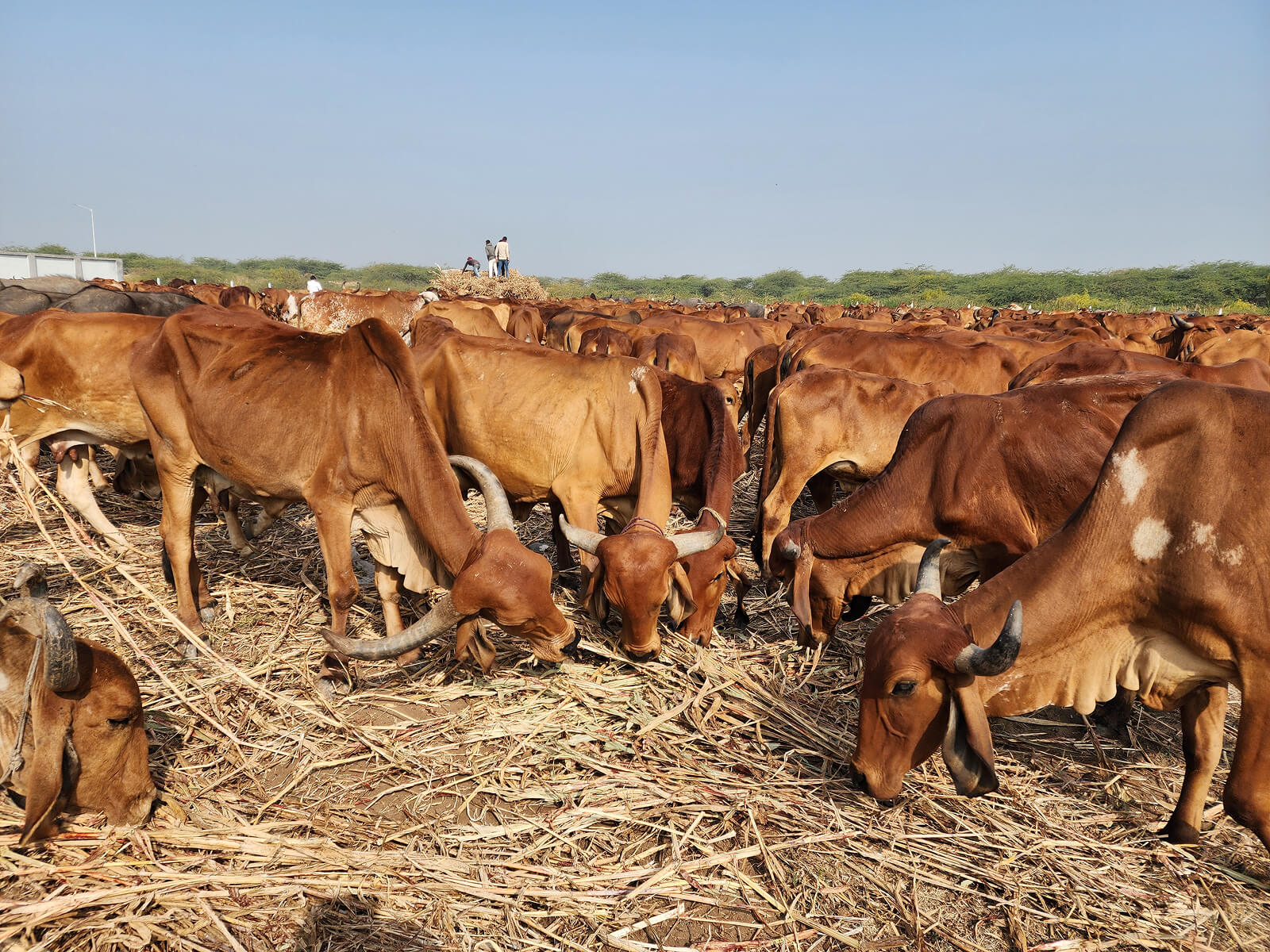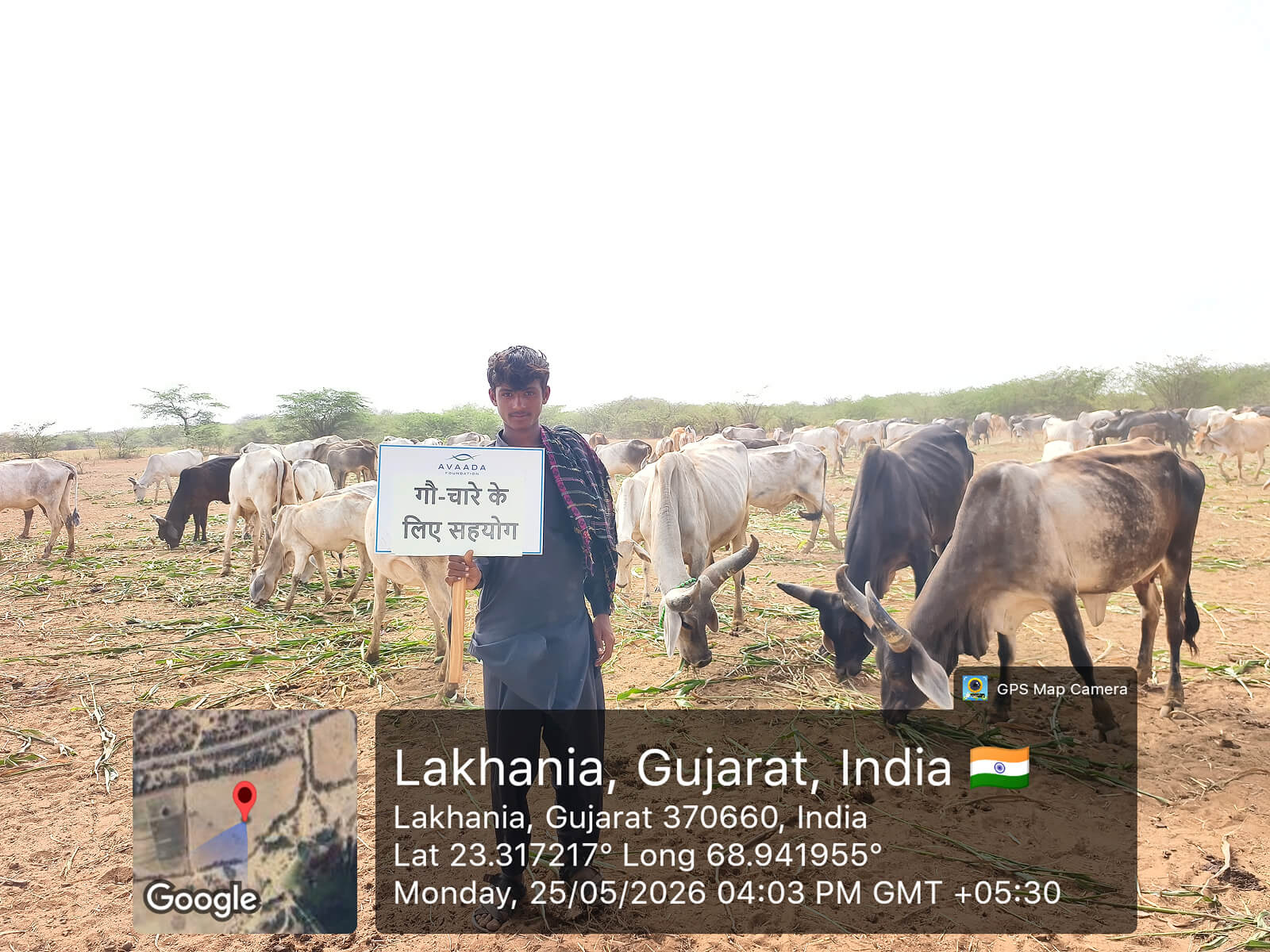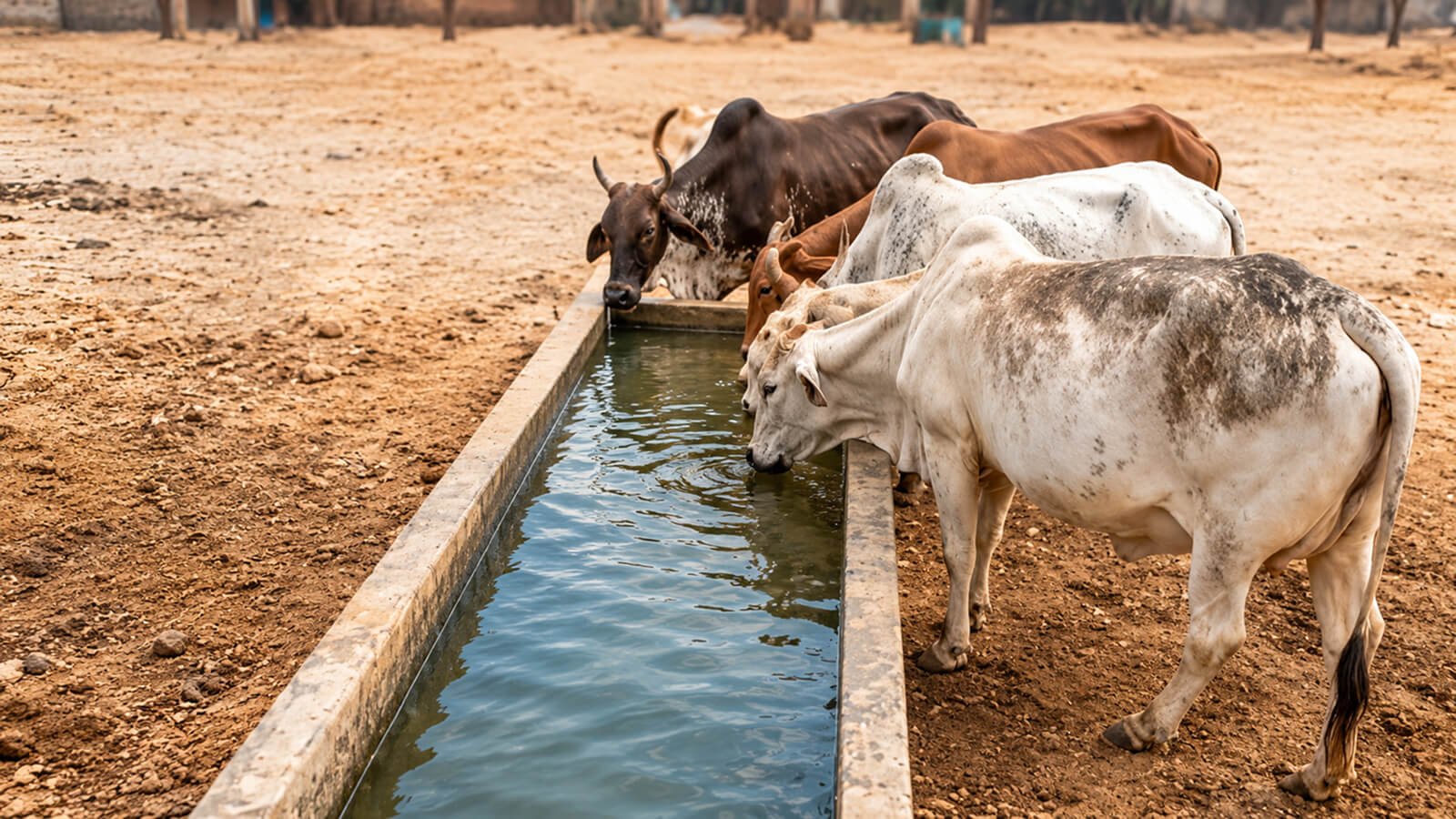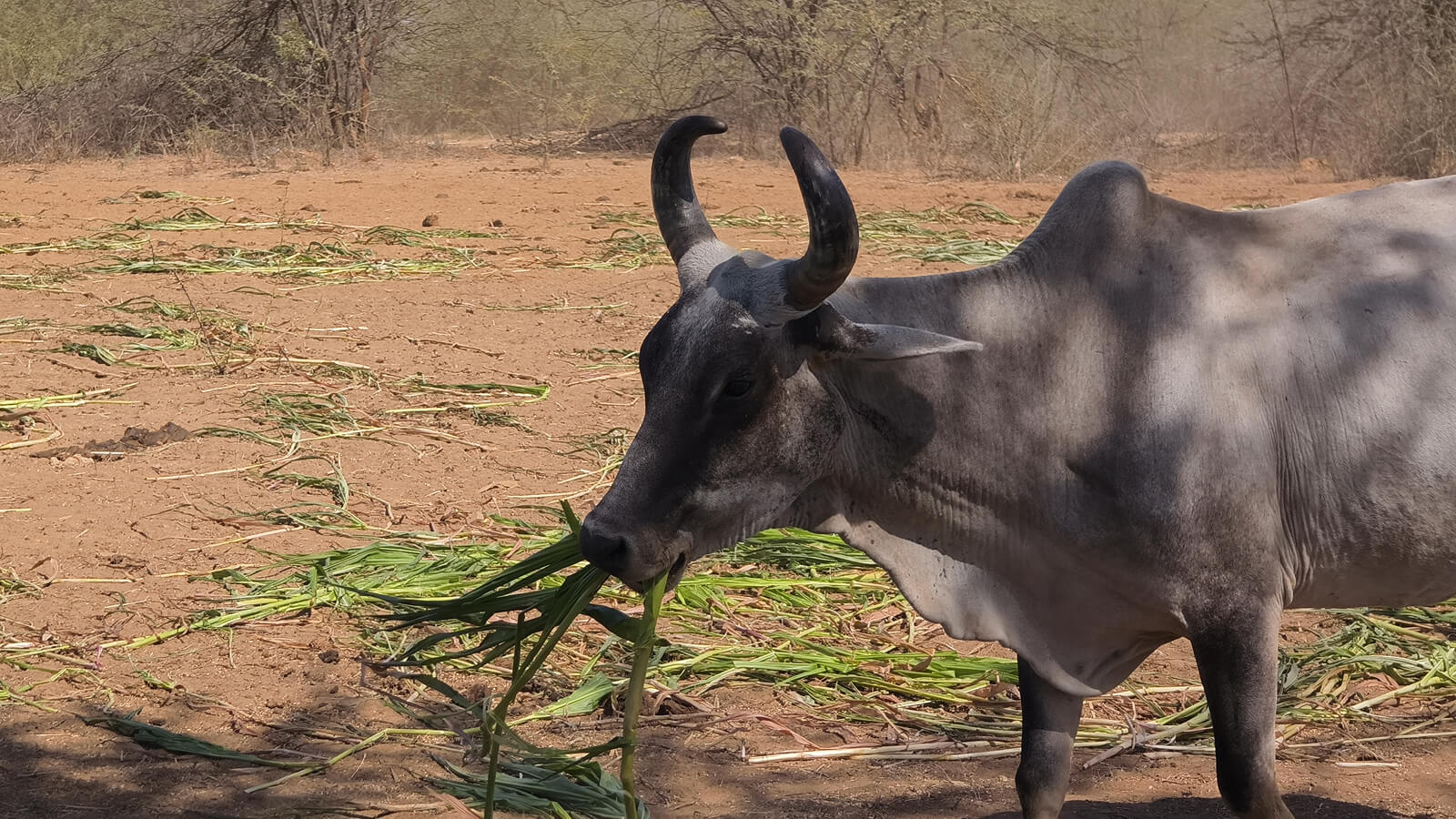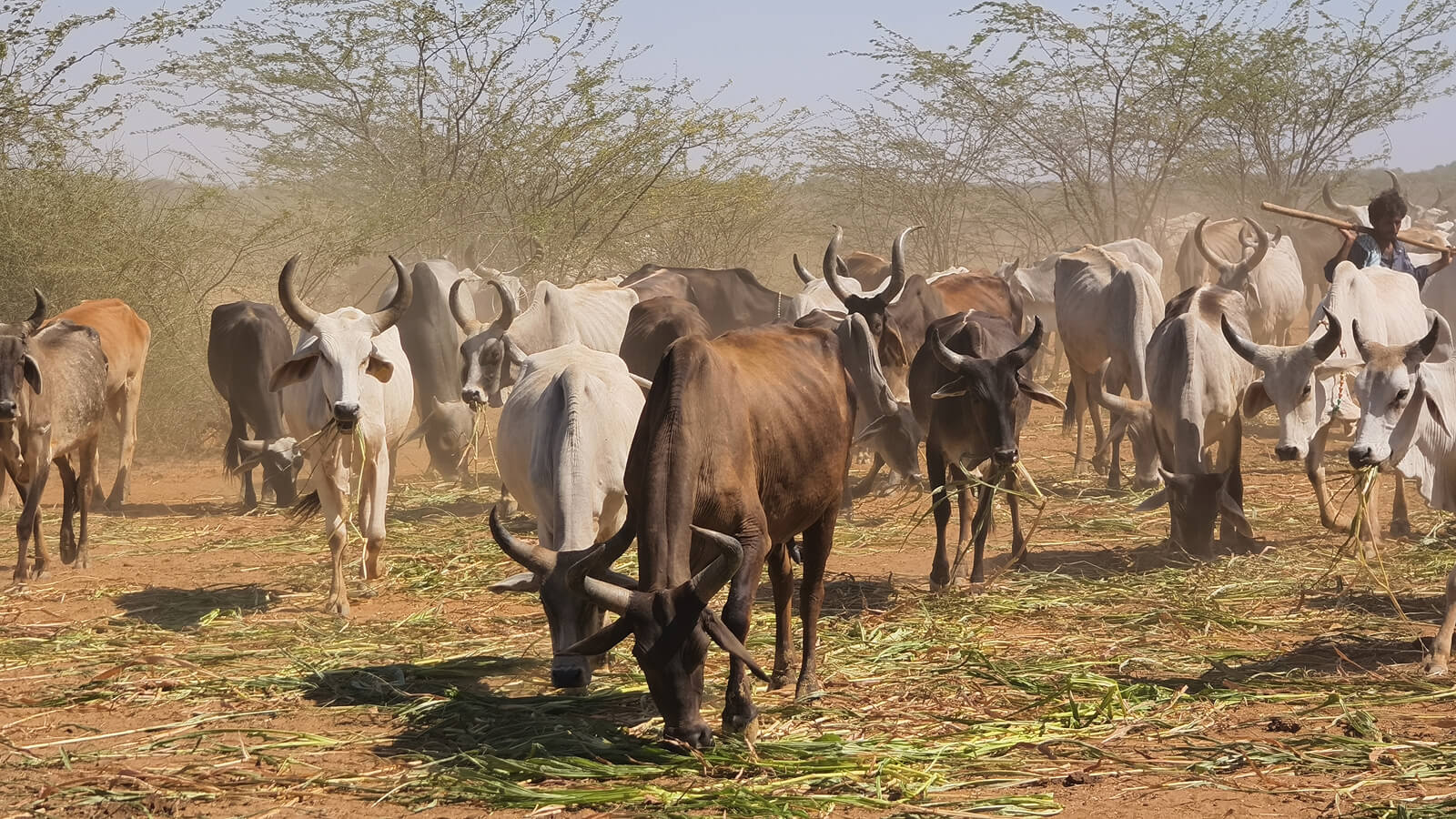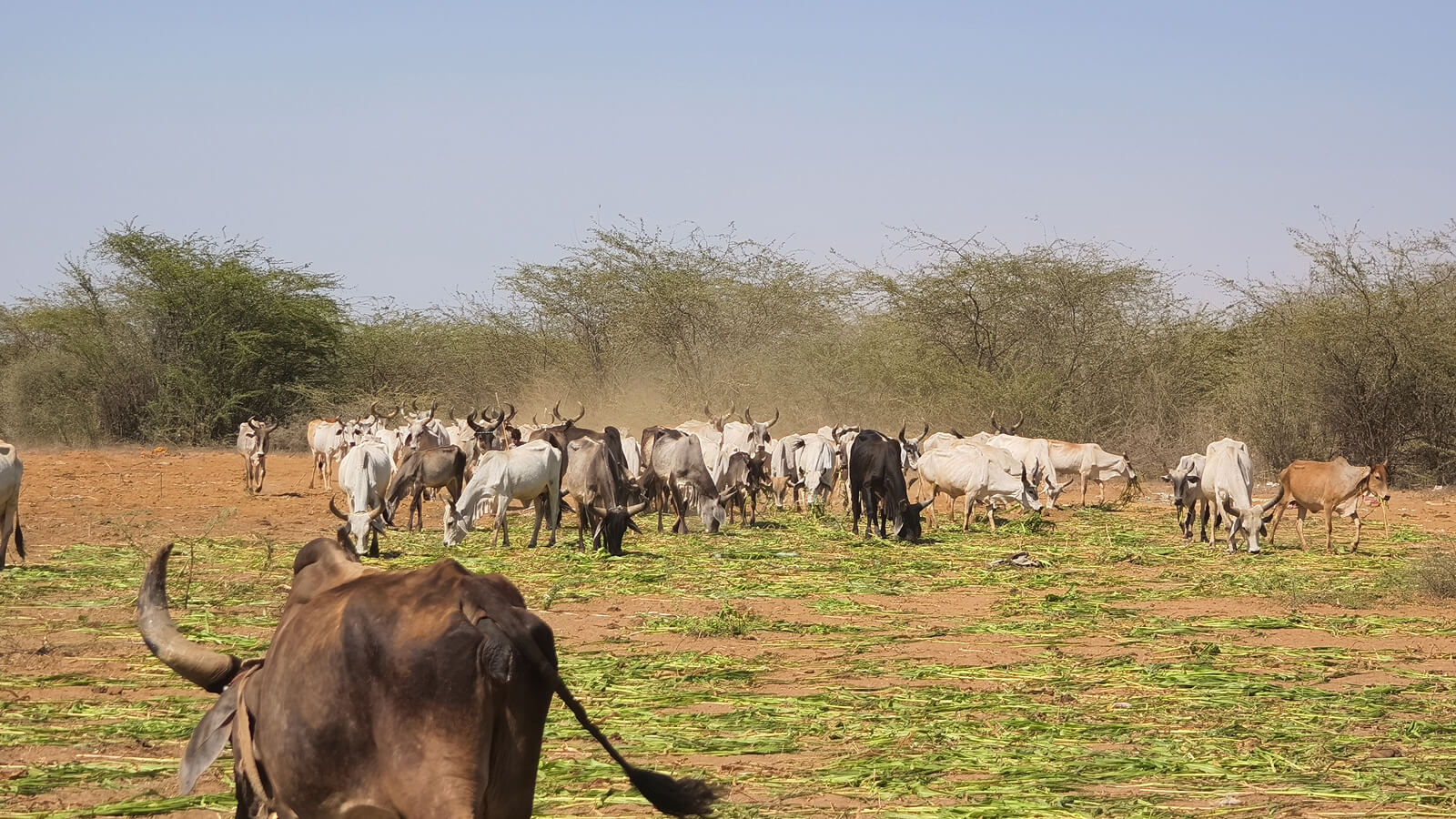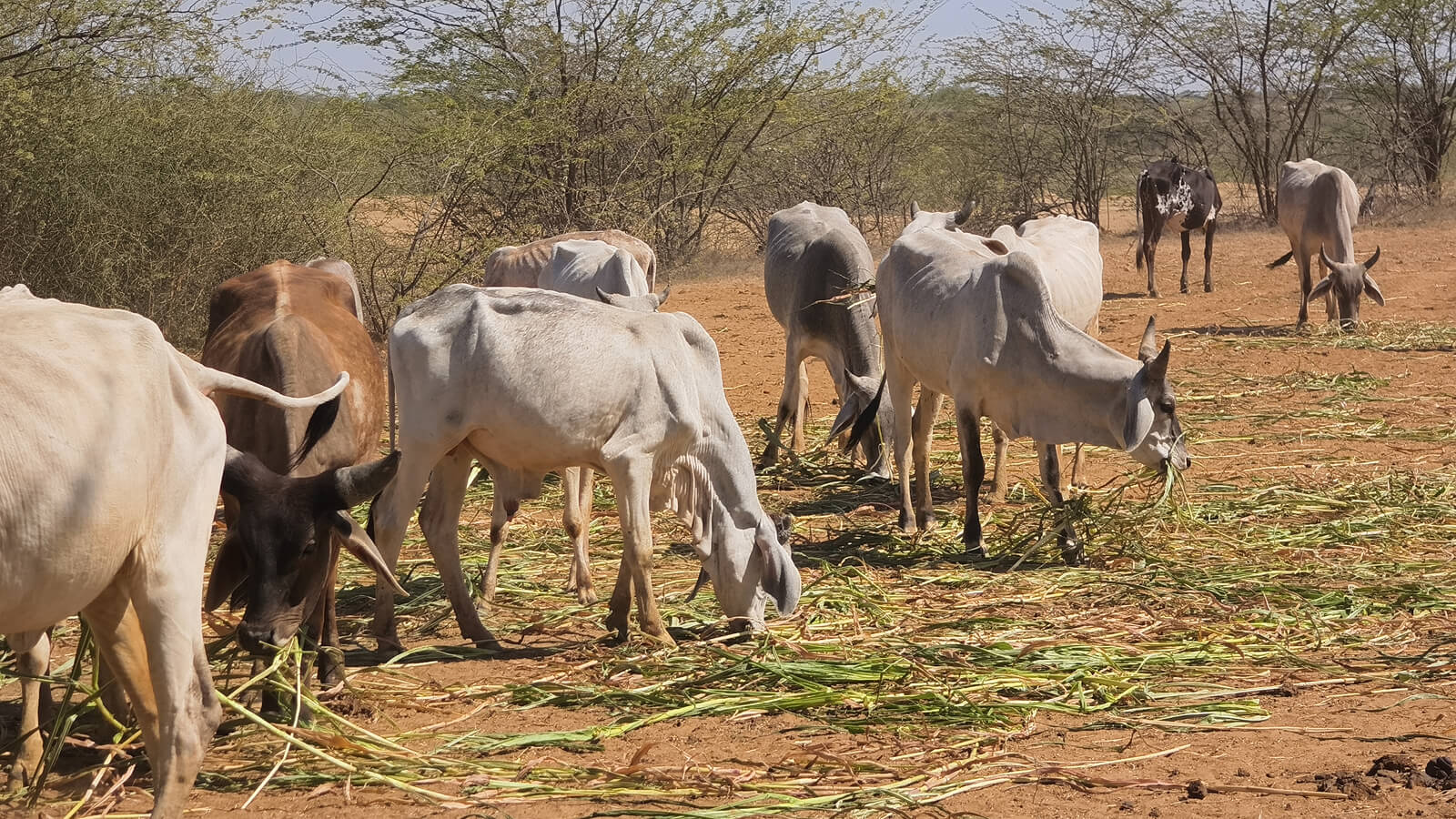
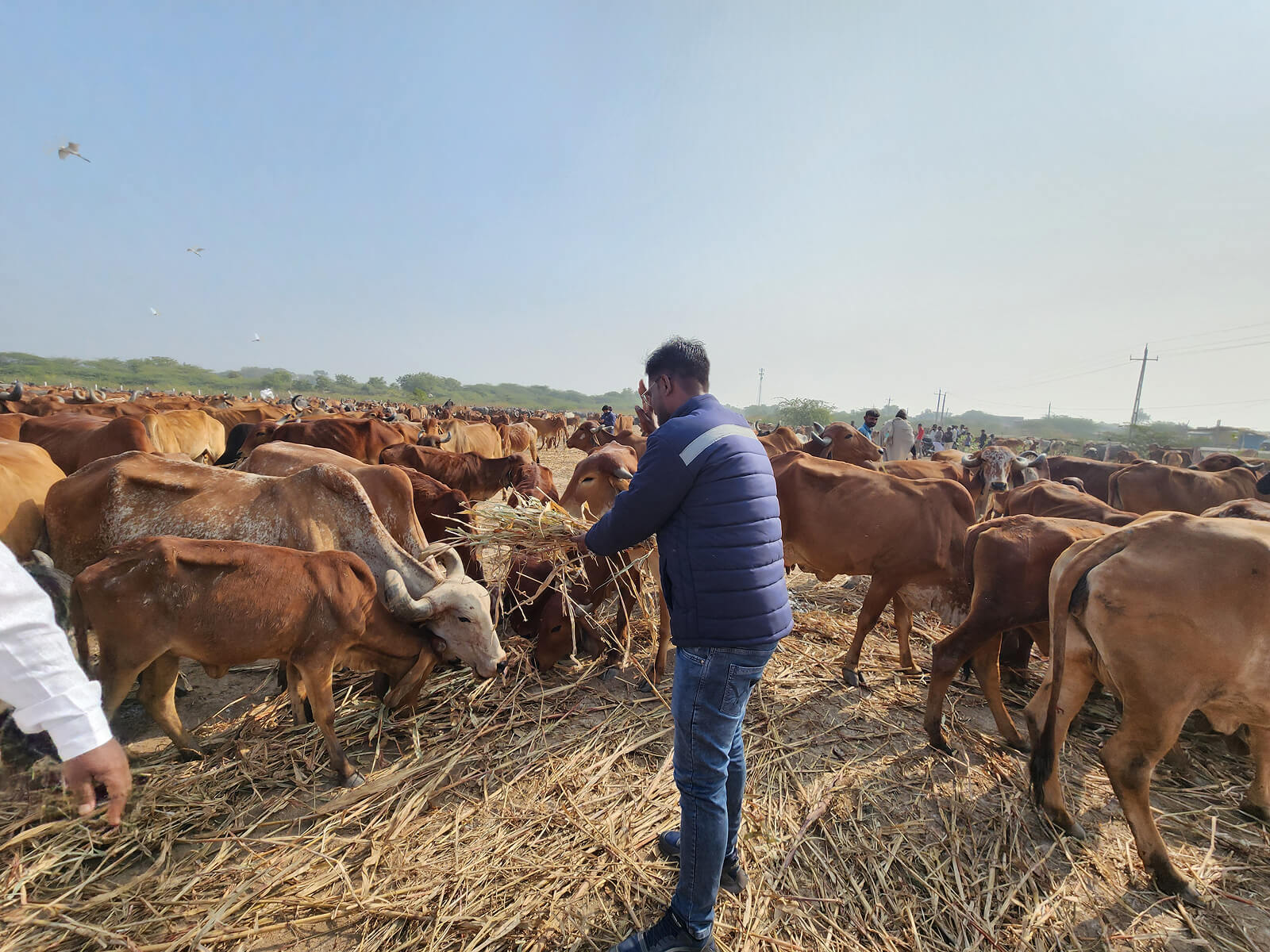
In the remote desert villages of Kutch, summer brings more than rising temperatures; it brings uncertainty, hardship, and a daily struggle for survival. Across Lakhania and Jatvandh villages in Abdasa Taluka, Gujarat, scorching heat and prolonged dry conditions have left grazing lands barren, creating a severe fodder crisis for livestock-dependent families. At the same time, water scarcity has further intensified the challenge. In some villages, water supply reaches only once a week, making survival increasingly difficult for both communities and their livestock during the peak summer months.
For many households here, livestock are not merely animals; they are the backbone of rural livelihoods. Cows and buffaloes provide milk, nutrition, income, and financial security. In villages like Jatvandh, several nomadic and pastoral families depend entirely on animal husbandry for survival, while in Lakhania, farmers and daily wage laborers rely heavily on cattle to sustain their households. When fodder disappears, livelihoods begin to collapse.
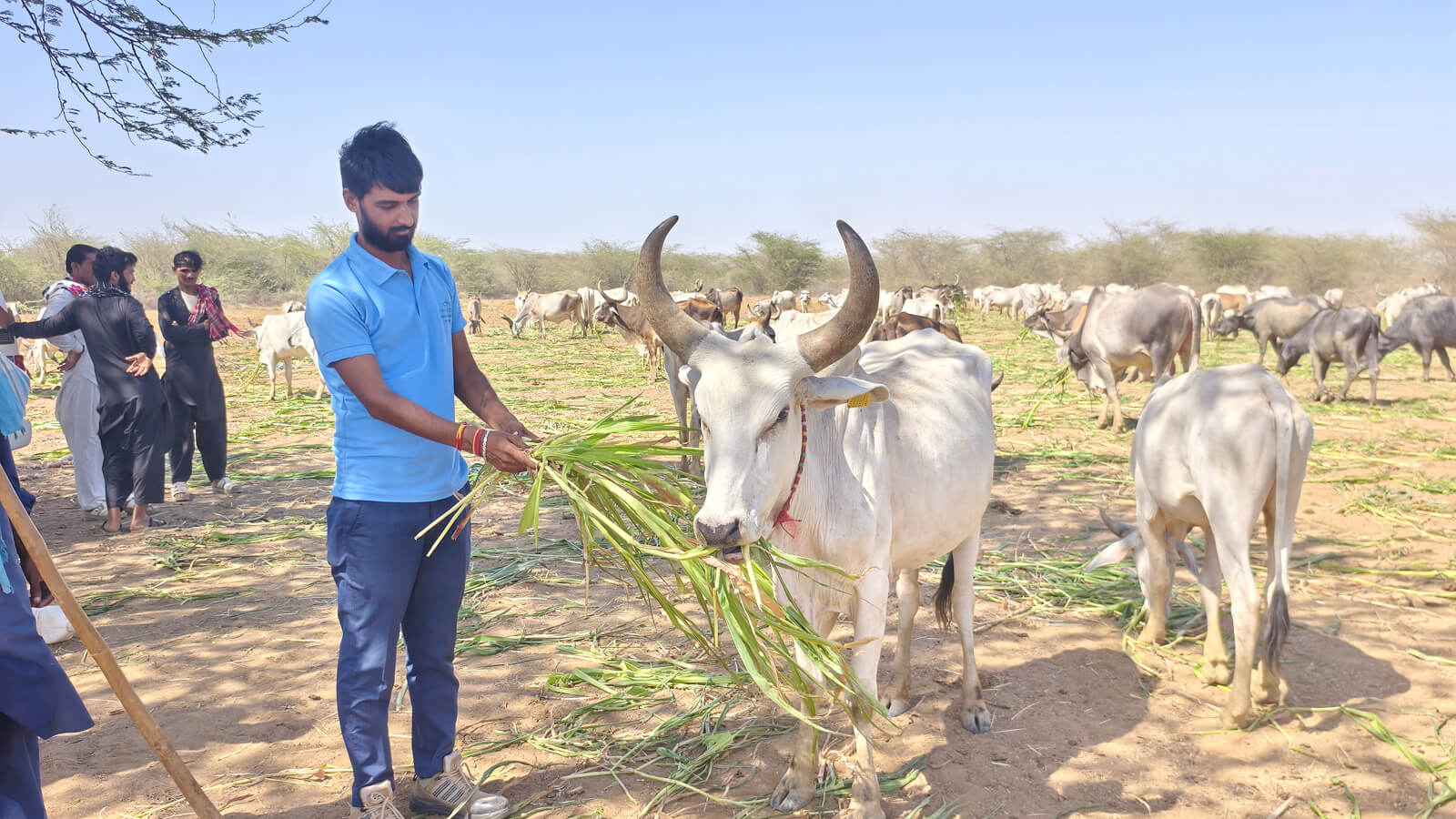
Recognizing the urgency of the situation, Avaada Foundation initiated logistical support for fodder distribution on 15th May 2026 to support vulnerable communities facing extreme summer conditions. Since the start of the initiative, nearly 3,500 – 4,000 kilograms of fodder is distributed each day, helping sustain close to 1,000 livestock, including around 900 cows and 100 buffaloes. A similar initiative was undertaken in Talsana Village of Lakhtar Taluka, Gujrat a few years back as well, where more than 2000 kg of fodder was made available to distressed villagers during the span of the summer season.
This prompt intervention is supporting more than 200 families in continuing to care for their animals with dignity and hope, while also reducing the risk of distress selling of cattle. For communities, whose economic stability is deeply tied to livestock, selling animals during a crisis often means losing their primary source of livelihood and slipping further into economic vulnerability.
The initiative reflects Avaada Foundation’s broader commitment to climate resilience, sustainable rural development, community wellbeing, and livelihood protection. Across regions, including Rajasthan and Bihar, we continue to support vulnerable communities through livestock healthcare initiatives, drinking water access for animals, and other need-based interventions aimed at strengthening rural resilience.
In regions like Kutch, where climate challenges directly affect survival, protecting livestock also means protecting families, preserving livelihoods, and sustaining hope for the future.